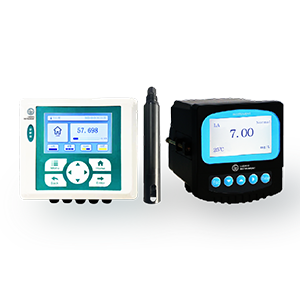
HA
Hardness Analyzer
4-20mA output parameter typ
- APPLICATION
- Widely used in industrial manufacturing and mechanical processing
- material research and quality control
- construction and building materials industry
- electronics and semiconductor industry
- medical equipment and food contact materials
- aerospace and military industry
- geological exploration and mining
- cultural relics protection and other industries.
- FUNCTIONAL CHARACTERISTICS
- Intelligence: Using a single-chip microprocessor to complete hardness value measurement
- temperature measurement
- and compensation;
- Double high impedance preamplifier: high input impedance
- anti noise
- strong anti-interference ability;
- There are three calibration methods: two-point calibration
- three-point calibration
- and known concentration calibration;
- Human computer dialogue: The menu operation is simple
- and users can operate it by following the prompts on the screen;
- Multi parameter display on the same screen: simultaneously display hardness value
- temperature value
- and working status;
- Software setting output mode: 4-20mA output parameter type;
- The measurement range and alarm upper and lower limits can be freely set; Alarm prompt for upper and lower limit exceeding limits;
- Three sets of relay control switches
- with adjustable hysteresis control range;
- Self cleaning switch setting
- setting cleaning time and interval;
- Data storage
- running logs
- and printing functions;
- After sales service: Provide technical support and contact information for after-sales service to users;
- Maintenance is very simple
- it is recommended to calibrate once a month;
- Adopting multiple calibration methods to ensure measurement accuracy;
- Chinese and English menus are optional.
DESCRIBE
The instrument consists of signal measurement, operation, display, and panel instructions. This instrument utilizes a PVC sensitive membrane calcium ion selective electrode with organic phosphate salt as the active material, which is used to measure the concentration of Ca2+ions in a solution. The instrument calculates the concentration of Ca2+ions through the collection and analysis of current signals, making it highly selective, requires no replacement parts, and requires minimal maintenance; Long electrode lifespan; Characteristics of high reliability.